How JoltMile estimates your tax
Income tax and Class 4 National Insurance on your running profit, using the 2026/27 bands.
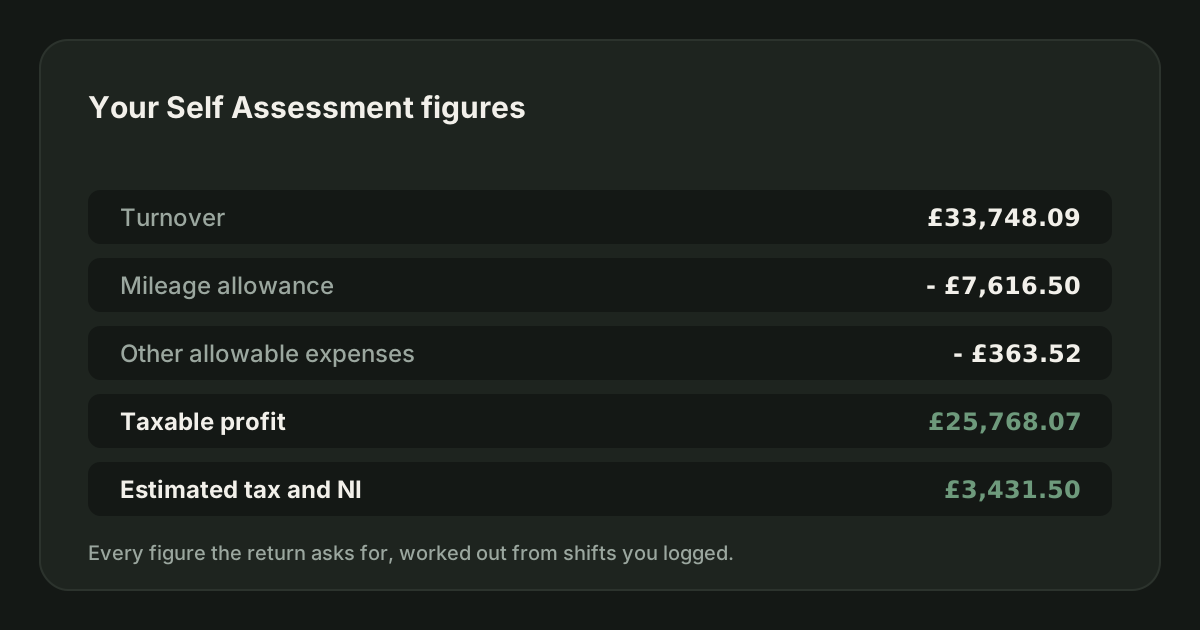
Last checked 12/09/2026.
What it is
A running estimate of the income tax and National Insurance you will owe on your delivery profit, updated with every shift so you can set the money aside as you go.
How it is calculated
Profit first: turnover, minus your mileage allowance, minus allowable expenses. Then:
- Income tax. 20% on profit above your personal allowance of £12,570, 40% above £50,270, 45% at the top. The personal allowance tapers away above £100,000.
- Class 4 National Insurance. 6% on profit between £12,570 and £50,270, then 2%.
Class 2 National Insurance is deliberately not in the total. Compulsory Class 2 was abolished from 6 April 2024: above £7,105 of profit it is treated as paid, and below it, it is voluntary at £3.65 a week. Including it would overstate what you owe. JoltMile shows it separately as guidance if your profit is below the threshold.
Tax is attributed to shifts incrementally - each shift is charged the difference its profit makes to the running total - so an early shift in the year, sheltered by your personal allowance, carries no tax while a later one does. That is what makes the per-shift hourly rate meaningful across a year.
Other income and PAYE
Add a job, rent or another trade under Other income and the estimate works out tax on all of it together, the way HMRC does. A job normally uses up your personal allowance first, so more of your driving profit becomes taxable, and the estimate shows that.
For a job, enter the tax already taken off each payslip. It comes off the bill at the end, so the tax on your wages is not counted as owed a second time. If more was taken than the whole year works out at, the estimate goes below zero, which means HMRC owes you. See other income and PAYE.
Only switch it off if you would rather not enter the job at all. Your driving profit is then taxed from the first pound, which is roughly right, but the estimate has no way to show the tax your employer already paid.
Mistakes to avoid
- Treating it as your tax bill. It is an estimate for budgeting, and JoltMile does not file anything.
- Forgetting payments on account (opens in a new tab) if your bill reaches £1,000.
- Having a job and leaving it out. Add it under Other income, or the estimate assumes your driving is all you earn.
Related
How much tax will I pay as a delivery driver?
Income tax at 20% on profit above £12,570, plus Class 4 National Insurance at 6%.
HMRC & taxUpdated 19/08/2026
Self Assessment
Self Assessment is the system HMRC uses to collect tax from people whose tax is not taken at source. You report your income and costs once a year and pay what falls out, by 31 January.
HMRC & taxUpdated 27/08/2026
Self Assessment for delivery drivers: the complete guide
Registering, what counts as income, what you can claim, how much tax you will owe and when it is due - written for UK delivery and courier drivers, correct for the 2026/27 tax year.
HMRC & taxUpdated 19/08/2026
Riding for Deliveroo: the full guide
How Deliveroo works for a rider: what you need to join, how each fee is worked out, the pay floor agreed with the GMB union, when the money arrives, the insurance Deliveroo gives you for free, and the parts that are left to you.
Getting startedUpdated 29/09/2026
Delivering for Uber Eats: the full guide
How Uber Eats works for a courier: signing up, how each delivery is paid, Quests and batched orders, the weekly pay cycle and the two ways to cash out early, the free Allianz cover, Uber Eats Pro, and the tax side.
Getting startedUpdated 29/09/2026
Delivering for Just Eat: the full guide
Just Eat works differently from the other food apps. You set your availability each week and are scheduled into delivery runs, each order pays Transit Pay, and your acceptance rate decides how quickly offers reach you. Here is how all of it fits together.
Getting startedUpdated 29/09/2026