Insurance for delivery drivers: what you actually need
Hire and reward, courier cover, goods in transit and public liability - what each one is for, and why your ordinary car policy will not cover you.
Last checked 12/09/2026.
This is the one that catches new drivers out, and the consequences are serious rather than merely expensive. Delivering for money on an ordinary car policy means driving uninsured.
Why your normal policy does not cover you
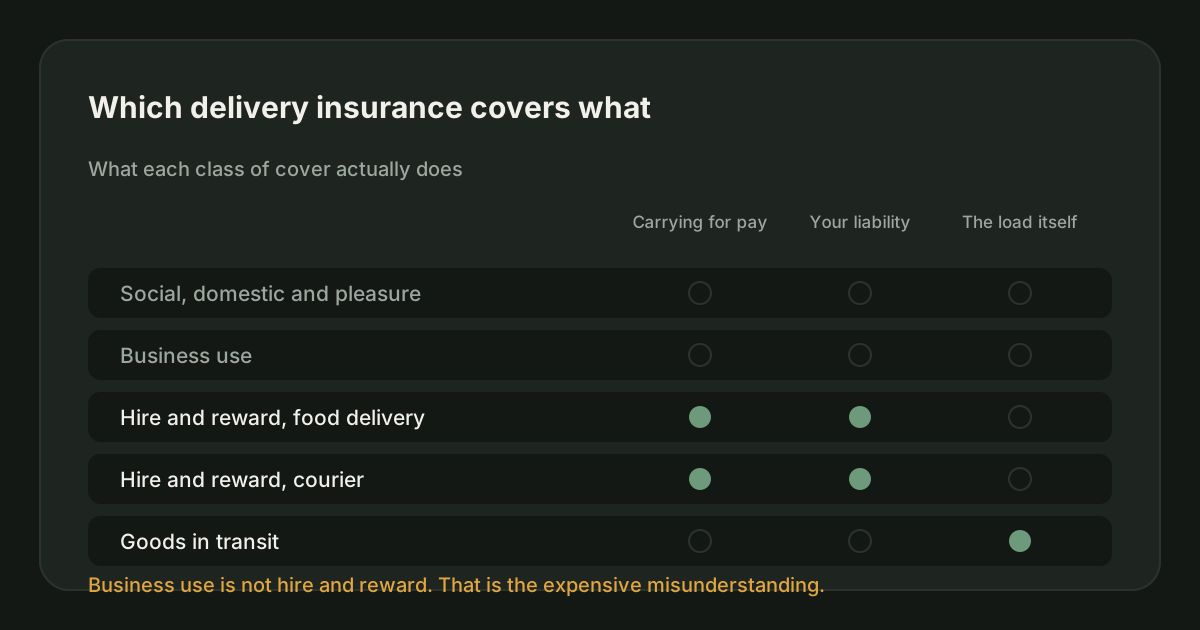
A standard car policy covers "social, domestic and pleasure", often with commuting added. Carrying goods for payment is a commercial use and is excluded. If you have an accident while delivering, the insurer can refuse the claim - and driving without valid insurance is an offence carrying six to eight penalty points and a fine, with the possibility of your car being seized.
Some insurers will also void the policy entirely rather than just decline the one claim, which affects your ability to get cover afterwards.
The types of cover
| Cover | What it is for | Who needs it |
|---|---|---|
| Hire and reward | Carrying goods or passengers for payment. The core requirement. | Every paid delivery driver. |
| Courier insurance | Hire and reward aimed at multi-drop parcel work. | Evri, DPD, Amazon Flex and similar. |
| Food delivery insurance | Hire and reward for short-hop food work, often sold by the hour or month. | Uber Eats, Deliveroo, Just Eat. |
| Goods in transit | The value of what you are carrying if it is lost, stolen or damaged. | Parcel work. Often required by the contract. |
| Public liability | Injury or damage you cause to a third party or their property while working. | Sometimes required; worth having. |
Pay as you go, or annual?
Food-delivery cover is commonly sold by the hour or by the month, switched on when you go online. It suits genuinely occasional work. Once you are driving regularly the per-hour price adds up quickly and an annual policy is usually cheaper.
The break-even is worth actually calculating rather than assuming. JoltMile supports annual, monthly and per-hour insurance and apportions the cost across your driving, so your hourly rate carries its real share and you can see which arrangement is cheaper for the hours you actually work.
How much does delivery insurance cost?
Prices vary far too much by age, postcode, vehicle and claims history for a national average to mean anything useful, so this guide does not quote one. Get quotes for your own circumstances from more than one specialist broker, and check whether the platform you drive for has a partner scheme.
Is insurance tax deductible?
It depends on which method you use for vehicle costs. If you claim the mileage allowance, vehicle insurance is already inside the 55p a mile and cannot be claimed again. If you claim actual costs, the business-use proportion is allowable. Non-vehicle business insurance - public liability, for example - is allowable either way.
Before you take a policy
- Check it names hire and reward, not just "business use". Business use class 1 is for driving to a second workplace, not for delivering.
- Check whether goods in transit is included or extra.
- Check the excess, which on delivery policies is often higher than you expect.
- Tell the insurer every platform you drive for. Cover for food delivery is not automatically cover for parcels.
- Keep the certificate where you can reach it. Some depots check.
Sources
Common questions
- Does my normal car insurance cover delivery work?
- No. Social, domestic and pleasure cover does not include carrying goods for payment, and neither does ordinary business use. You need hire and reward cover, which is a separate class.
- What happens if I claim on the wrong policy?
- The insurer can refuse the claim and void the policy from the start. You would then be personally liable for the other party damage, and driving without valid insurance is an offence in its own right.
- Do I need goods in transit cover?
- It covers the value of what you are carrying, which a motor policy does not. Rarely worth it for food delivery, usually worth it for parcels, and sometimes required by the contract you are working under.
- Is delivery insurance tax deductible?
- If you claim actual vehicle costs, yes, at the business proportion. If you claim the mileage rate, no, because the rate already includes insurance among the running costs it covers.
- Can I get cover just for the hours I work?
- Some insurers sell pay-as-you-go hire and reward that you switch on for a shift. It suits genuinely occasional work and it is expensive per hour if you drive regularly.
About the author
Issac Davies, Founder of JoltMile
Issac Davies drives for gig apps in the UK and built JoltMile to show drivers what a shift actually pays once fuel, insurance and tax come off. Every guide here is checked against HMRC and gov.uk guidance, and is information rather than tax advice.
Track this automatically
Insurance: the JoltMile app works this out from your own shifts. Your first 10 shifts are free.
Related
Self Assessment for delivery drivers: the complete guide
Registering, what counts as income, what you can claim, how much tax you will owe and when it is due - written for UK delivery and courier drivers, correct for the 2026/27 tax year.
HMRC & taxUpdated 19/08/2026
Does my normal car insurance cover delivery work?
No. You need hire and reward cover, and driving without it is an offence.
InsuranceUpdated 19/08/2026
How JoltMile handles insurance costs
Annual, monthly or per-hour cover, turned into a daily rate and spread across the driving it covers.
InsuranceUpdated 29/09/2026
Private hire or food delivery: which is worth doing?
Private hire pays more per hour and costs far more to get into. Food delivery you can start this week with the car you already own.
Earnings & profitabilityUpdated 20/08/2026
What do I need to drive for Bolt?
A private hire driver licence from your local council, a licensed vehicle, and hire and reward insurance. The same requirements as any private hire work.
Getting startedUpdated 20/08/2026
What happens if I have an accident while working?
Your motor insurance handles the vehicle, provided the policy covers delivery. There is generally no sick pay, which is the risk self-employment carries.
Practical problemsUpdated 20/08/2026