Comparing platforms on real net hourly
No platform pays a fixed rate, so the honest answer is that it depends on your area, your car and your hours. What can be compared is the shape: private hire has the highest gross and the highest costs, food delivery the lowest of both, and parcel work sits between them.
Correct for the 2026/27 tax year. Last checked 12/09/2026.
Every comparison article on this subject quotes hourly rates. Almost none of them says where the figures came from, because there is no published source. This one does not quote any, and explains what to compare instead.
Why there is no table of rates
Platform pay is dynamic. It varies by city, by time of day, by demand, by promotion and by how many drivers are logged in. Two drivers on the same app in the same week can be thousands of pounds a year apart. A single number for a platform is not a fact, it is a guess with a decimal point on it.
What genuinely differs
| Food delivery | Parcel and courier | Private hire | |
|---|---|---|---|
| Gross per hour | Lowest | Middle | Highest |
| Miles per hour worked | Low to moderate | High | High |
| Fixed costs before you start | Low | Moderate | High: licence, vehicle standard, passenger insurance |
| Insurance | Food delivery cover | Courier cover, often plus goods in transit | Private hire, the most expensive |
| Flexibility | Highest | Lower, rounds are committed | High |
| Dead time | High in off-peak hours | Low, the round is the work | Moderate |
The row that decides most comparisons is miles per hour worked. At a real cost of around 36p a mile, a driver covering 30 miles an hour is spending £10.80 an hour before anything else, and one covering 14 is spending £5.04. That gap is larger than most of the differences in gross rate.
The comparison worth making
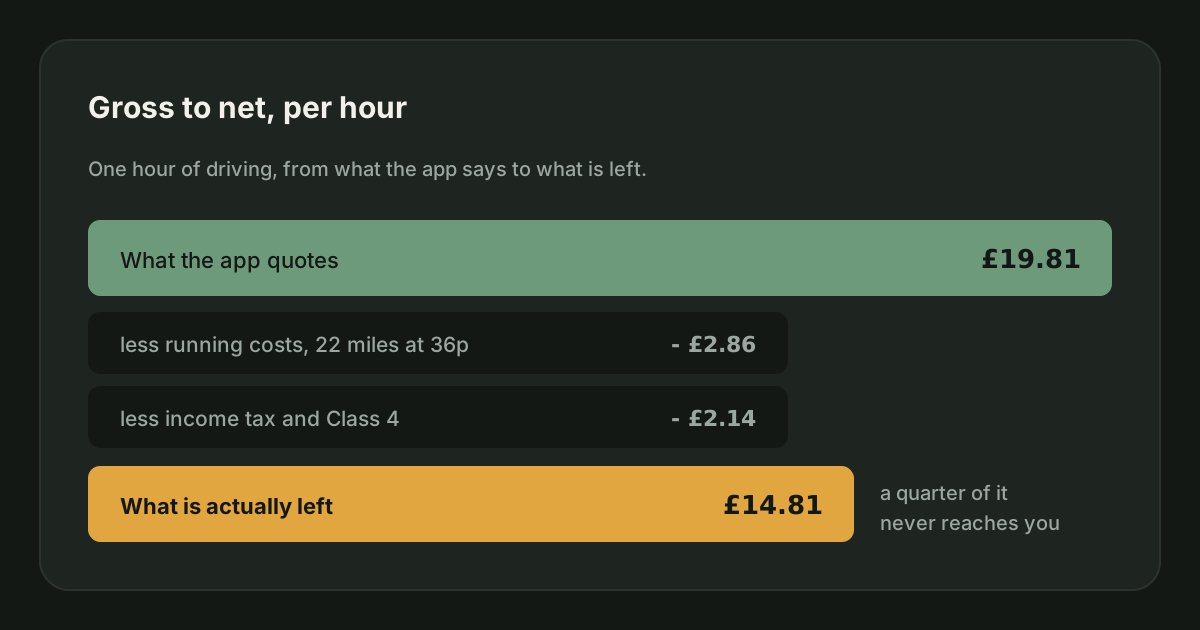
Gross paid, minus (miles driven times your cost per mile), minus tax on the profit, divided by hours worked.
Do that for a month on each platform you are considering and the answer is specific to you, which is the only kind of answer worth having here. Your real hourly rate sets out the method and what it really costs you per mile produces the input it needs.
Why not to optimise too hard
Chasing the highest rate concentrates you on one platform, and platform concentration is the largest uncontrolled risk in gig driving. Deactivation, a policy change or a rate cut lands on your whole income at once. Two platforms at slightly lower average rates is usually a better business than one at the highest.
Multi-apping without losing track covers doing that without making the records unmanageable.
Common questions
- Which delivery app pays the most in the UK?
- There is no single answer, because none of them pays a fixed rate and all of them vary by city, hour and demand. Anybody quoting one number for a platform is quoting either their own experience or a figure they made up.
- Is private hire better paid than food delivery?
- Gross, usually yes. Net, often much less than the gap suggests, because licensing, vehicle standards and passenger insurance all cost considerably more before the first fare.
- Is parcel work better than food?
- Parcel rounds tend to give more predictable hours and more drops per hour, and often more miles. Food delivery has lower fixed costs and more flexibility. Which wins depends on your cost per mile.
- Should I just work whichever pays most?
- Diversifying matters more than optimising. A driver on one platform who gets deactivated has no income; a driver on two has half. That risk is worth more than a small difference in rate.
- How do I compare them properly?
- Track a month on each, with hours worked, miles driven and gross paid, then apply your own cost per mile and your marginal tax rate. Your own numbers beat anybody's average.
About the author
Issac Davies, Founder of JoltMile
Issac Davies drives for gig apps in the UK and built JoltMile to show drivers what a shift actually pays once fuel, insurance and tax come off. Every guide here is checked against HMRC and gov.uk guidance, and is information rather than tax advice.
Track this automatically
True hourly rate · Platform breakdown: the JoltMile app works this out from your own shifts. Your first 10 shifts are free.
Related
Your real hourly rate, and how to work it out
Your real hourly rate is what the platforms paid you, minus what the vehicle cost you, minus the tax on the profit, divided by every hour you were working. It is commonly a quarter below the headline figure, and it is the only number worth comparing between platforms.
Earnings & profitabilityUpdated 27/08/2026
Net earnings
Net earnings are what is actually left after the costs of doing the work and the tax on the profit. It is the only figure worth comparing between platforms, and no app shows it.
Earnings & profitabilityUpdated 27/08/2026
What it really costs you per mile
Your cost per mile is fuel plus tyres, servicing, insurance, repairs and the value the car loses, divided by the miles you drive. Fuel is usually less than half of it, which is why a driver who only counts fuel thinks the work pays better than it does.
Vehicles & equipmentUpdated 27/08/2026
Is parcel delivery better paid than food delivery?
Usually steadier rather than better. Parcel rounds pay a more predictable amount per hour but cover far more miles, which costs more in fuel and wear.
Earnings & profitabilityUpdated 20/08/2026
When each app pays you, and why the date matters for tax
Most apps pay weekly, on different days, with a fee to get it sooner. Evri pays monthly. The pay date decides how much cash you need in reserve and, at the start and end of the year, which tax year the money falls in.
Earnings & profitabilityUpdated 29/09/2026
Multi-apping: driving for more than one platform
Running two or three delivery apps at once - whether it is allowed, whether it pays, and how to keep records that still make sense at tax time.
Multi-app drivingUpdated 19/08/2026