Your real hourly rate, and how to work it out
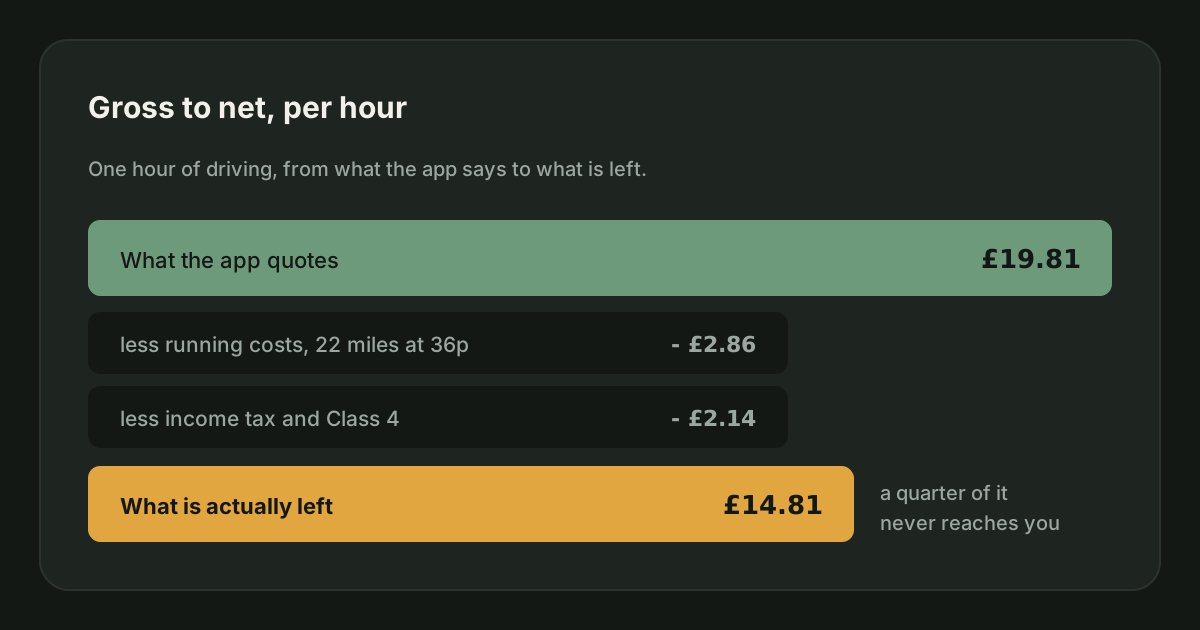
Your real hourly rate is what the platforms paid you, minus what the vehicle cost you, minus the tax on the profit, divided by every hour you were working. It is commonly a quarter below the headline figure, and it is the only number worth comparing between platforms.
Correct for the 2026/27 tax year. Last checked 12/09/2026.
Everybody in gig driving quotes a gross hourly figure and nobody can tell you what they actually made. The gap between the two is the whole subject of this page.
The calculation
Real hourly rate = (what the platforms paid, minus running costs, minus tax and National Insurance) divided by hours worked
Three inputs, and the one people get wrong is the third. Hours worked means every hour you were available and working, not the hours you were carrying an order.
A worked shift
One driver, one eight-hour Saturday. Their own figures, not an average.
| Line | Amount |
|---|---|
| Paid by the platforms | £158.48 |
| Miles driven while working | 176 |
| Running cost at 36p a mile | £63.36 |
| Profit from the shift | £95.12 |
| Income tax and Class 4 at basic rate on the profit | £26.63 |
| Left | £68.49 |
| Hours worked | 8 |
| Real hourly rate | £8.56 |
The app for that shift would have shown £19.81 an hour. The driver kept £8.56. Neither number is dishonest; they measure different things, and only one of them buys anything.
The lever that matters
Look at the second and third lines. Twenty-two miles an hour at 36p is £7.92 an hour of cost before anything else. A driver working denser, shorter routes at 14 miles an hour has a cost of £5.04 an hour at the same gross rate, and takes home nearly £3 an hour more for identical work.
That is why the useful question about a job is what it pays per mile, not what it pays per hour, and why chasing surge across a city is usually a losing move.
Work out yours
- Pick a full month. A single shift is too noisy and a year is too slow to act on.
- Add up everything every platform paid you in that month, gross.
- Add up the miles you drove while working. Odometer readings, not estimates.
- Multiply the miles by your cost per mile. Work that out first if you have not.
- Take your marginal tax rate off the profit. For most drivers that is basic rate income tax plus Class 4 National Insurance.
- Divide by the hours you were working, including waiting and repositioning.
What it really costs you per mile covers step four, which is the one that needs a year of data behind it.
What to do with the number
Compare it between platforms, between times of day and between areas, rather than against anybody else. It is a measurement of your own operation, and the parts of it you can change are the miles per hour and which work you accept.
JoltMile calculates this per shift and across the year from your own figures. It is deliberately lower than the number in the app, and why is my hourly rate lower in JoltMile explains exactly which lines are being subtracted.
Sources
Common questions
- Why is my real hourly rate lower than the app says?
- Because the app counts the money it paid you and none of the costs of earning it. Fuel, insurance, wear on the vehicle and the tax on the profit all come out of that figure, and none of them appears in the app.
- Which hours should I count?
- Every hour you were working, including waiting for an order and driving to a pickup. Counting only the hours you were carrying something produces a flattering number that describes nothing.
- Should I take tax off before comparing platforms?
- Yes, if you want a figure you can compare with an employed wage. An employed rate is quoted before tax though, so if you are comparing with a job advert, compare before tax and be consistent.
- What makes the biggest difference?
- Miles per hour worked. A driver covering 15 miles an hour and one covering 30 have very different cost bases at the same gross rate, and it is the single figure most worth reducing.
- Is a low hourly rate a reason to stop?
- Not on its own. Flexibility has real value and a low rate on your own terms can beat a higher one on somebody else's. It is a reason to know the number rather than to guess it.
About the author
Issac Davies, Founder of JoltMile
Issac Davies drives for gig apps in the UK and built JoltMile to show drivers what a shift actually pays once fuel, insurance and tax come off. Every guide here is checked against HMRC and gov.uk guidance, and is information rather than tax advice.
Track this automatically
True hourly rate · Take-home pay · Estimated tax: the JoltMile app works this out from your own shifts. Your first 10 shifts are free.
Related
What it really costs you per mile
Your cost per mile is fuel plus tyres, servicing, insurance, repairs and the value the car loses, divided by the miles you drive. Fuel is usually less than half of it, which is why a driver who only counts fuel thinks the work pays better than it does.
Vehicles & equipmentUpdated 27/08/2026
Net earnings
Net earnings are what is actually left after the costs of doing the work and the tax on the profit. It is the only figure worth comparing between platforms, and no app shows it.
Earnings & profitabilityUpdated 27/08/2026
Gross earnings
Gross earnings are what a platform says it paid you, before your costs and before tax. It is the headline figure in the app and it is the one that makes gig driving look better paid than it is.
Earnings & profitabilityUpdated 27/08/2026
Why is my hourly rate lower in JoltMile than in the app I drive for?
Because it takes fuel, insurance and your real hours off. Platform figures usually show what they paid you, divided by the time they think you were working.
Earnings & profitabilityUpdated 20/08/2026
Amazon Flex, Evri, DPD and Yodel: parcel work compared
Parcel work suits drivers who want daytime hours and a predictable load. The four big options differ on the vehicle they need, how you are paid, how often, and how much of the week they expect. Here they are side by side.
Earnings & profitabilityUpdated 29/09/2026
Car, moped or bike: which is best for delivery work?
A bike wins in a dense city centre, a moped wins in most towns, and a car wins on parcel work and bad weather. The tax relief follows the same order in reverse.
Vehicles & equipmentUpdated 20/08/2026