How JoltMile calculates your true hourly rate
The difference between gross, business and true £/hr, and exactly what each one subtracts.
Last checked 12/09/2026.
What it is
What an hour of your driving actually pays after the costs of doing it. This is the figure JoltMile exists to produce.
The two rates
| Rate | What it subtracts | What it is for |
|---|---|---|
| Gross £/hr | Nothing. Earnings ÷ hours. | What the platform effectively paid you. Comparable to what the apps advertise. |
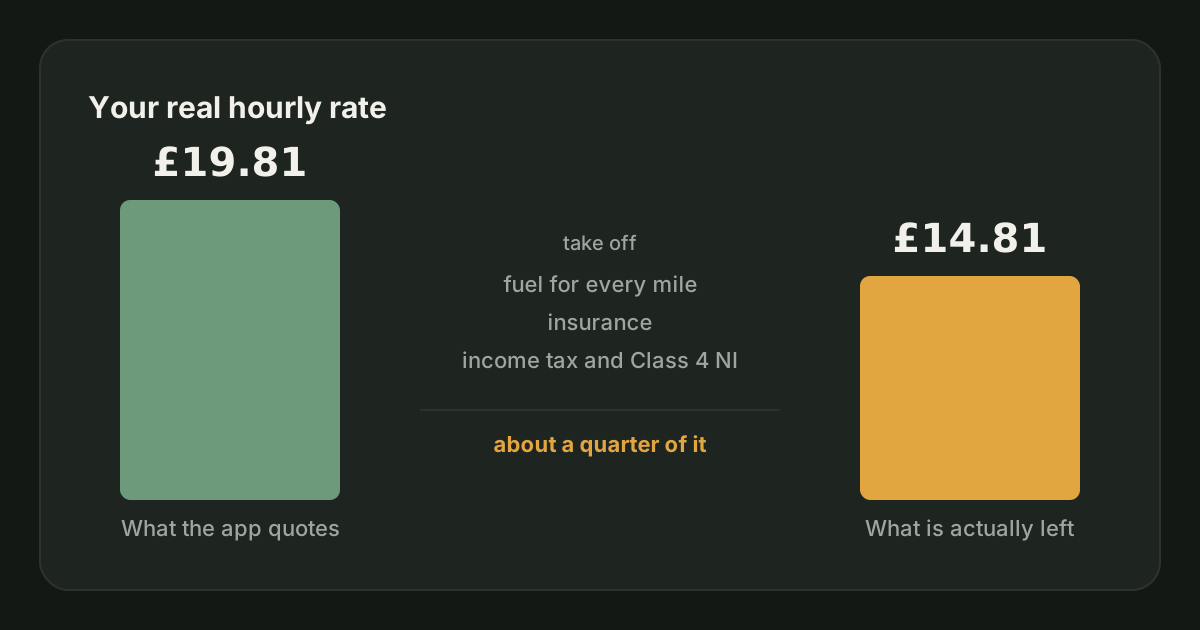
| True £/hr | Fuel for all miles including commuting, insurance and tax. | What driving for a living actually leaves you. The honest number. |
There used to be a third, Business £/hr, which left the commute out. It was retired: now that take-home pay counts every mile you drove, the two rates said the same thing for most drivers, and two names for one number is worse than one.
You choose which one heads your Earnings tab with the switch beside the figure. The default is true £/hr.
How it is calculated
true £/hr = (earnings − fuel for all miles − insurance share − tax) ÷ hours
Every term comes from the same records the rest of the app uses: fuel from your cost per mile, insurance from your apportioned premium, and tax from your running profit.
Across a period, rates are always recomputed from the summed totals - gross earnings minus total costs, divided by total hours. They are never averaged from each shift's own rate, which would let a two-hour shift count as heavily as a ten-hour one.
Why the gap is usually bigger than expected
Commuting is the main reason. A 30-mile round trip to a depot for a six-hour block is 30 miles of fuel that earned nothing, and it comes off every single shift. That is why the difference between gross and true is often several pounds an hour.
Mistakes to avoid
- Comparing your true £/hr against another job's gross wage. Compare like with like.
- Leaving commuting miles out to make the number look better. The number is the point.
- Reading one shift as a trend. A week is the smallest unit that tells you anything.
Related
Take-home pay, and how it differs from current balance
One figure counts every cost you had. The other counts only the cost of the driving. Both are true, and they answer different questions.
Earnings & profitabilityUpdated 29/09/2026
How JoltMile works out your fuel cost
Cost per mile from your own MPG and price per litre, with a weekly UK average price from the government fuel data.
Mileage & expensesUpdated 29/09/2026
How JoltMile handles insurance costs
Annual, monthly or per-hour cover, turned into a daily rate and spread across the driving it covers.
InsuranceUpdated 29/09/2026
How JoltMile estimates your tax
Income tax and Class 4 National Insurance on your running profit, using the 2026/27 bands.
HMRC & taxUpdated 29/09/2026
How much can you earn with Uber Eats?
Why there is no honest national average, what actually drives the number, and how to work out your own rate after costs.
Earnings & profitabilityUpdated 19/08/2026
Riding for Deliveroo: the full guide
How Deliveroo works for a rider: what you need to join, how each fee is worked out, the pay floor agreed with the GMB union, when the money arrives, the insurance Deliveroo gives you for free, and the parts that are left to you.
Getting startedUpdated 29/09/2026