Late filing and late payment penalties
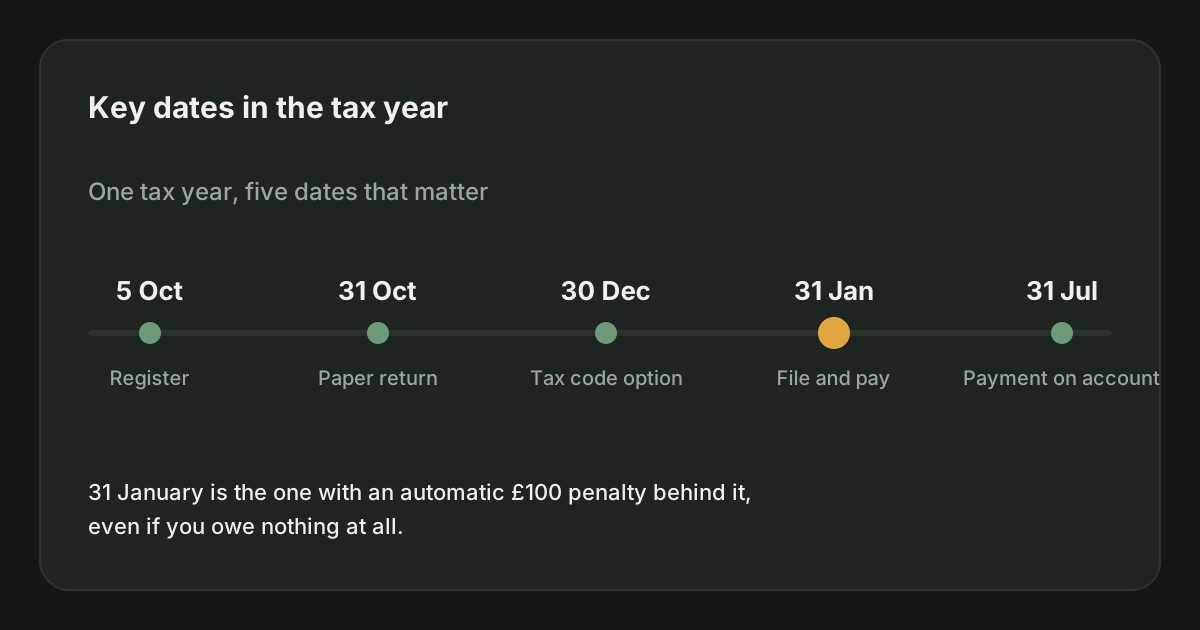
Miss 31 January and there is an immediate £100 penalty even if you owe nothing. It escalates at three months, six months and twelve. Late payment carries separate penalties and interest, and the two run alongside each other rather than instead of each other.
Correct for the 2026/27 tax year. Last checked 12/09/2026.
The penalties are automatic and the first one is fixed. Nothing about them scales with how small your tax bill is, which is why a driver who owed nothing can still owe £100.
Filing late
A return filed one day after the deadline costs £100, even if there was no tax to pay. After three months it grows by £10 a day for up to 90 days, and at six and twelve months there are further penalties of 5% of the tax due or £300, whichever is more.
| How late | Penalty |
|---|---|
| 1 day | £100, fixed, whatever the tax |
| 3 months | £10 a day, for up to 90 days (up to £900) |
| 6 months | A further 5% of the tax due, or £300, whichever is more |
| 12 months | Another 5% of the tax due, or £300, whichever is more, and up to 100% of the tax where it was deliberately withheld |
They stack. A return filed thirteen months late has accrued every stage above.
Paying late
A separate regime. Interest runs from the due date, and penalties are charged at intervals based on the tax outstanding. Paying late is generally cheaper than filing late in the first month and considerably more expensive over time, because interest keeps running.
Time to Pay
HMRC will usually agree an instalment plan for a Self Assessment bill, and for smaller amounts it can be set up online without speaking to anybody. Arranging it before the deadline is treated very differently from arranging it after a missed payment. What if I cannot pay my tax bill has the detail.
Appealing
- File the outstanding return first. An appeal with the return still missing almost never succeeds.
- Appeal within 30 days of the penalty notice.
- State the reason plainly and give dates. "I was in hospital from 3 January to 2 February" is an excuse; "it has been a difficult year" is not.
- Include evidence if you have it.
- If it is refused and you still think it is wrong, you can ask for a review and then appeal to the tribunal.
Avoiding all of it
Register early, keep records as you go, and file in the spring rather than in January. The deadlines are 5 October to register, 31 January to file online and pay, and 31 July for a second payment on account. None of them moves.
Sources
Common questions
- What is the penalty for filing late?
- An immediate £100, regardless of whether any tax is owed. After three months daily penalties can be charged, and there are further penalties at six and twelve months based on the tax due.
- Do I get a penalty if I owe nothing?
- Yes. The £100 is for the return being late, not for the tax. A nil return filed in February still attracts it.
- Is filing late the same as paying late?
- No. They are separate penalty regimes. Filing late costs £100 straight away, even if you owe nothing or paid on time. Paying late attracts its own penalties plus interest from the due date.
- What is a reasonable excuse?
- Something genuinely outside your control that stopped you filing: a serious illness, a bereavement, a fire or flood, a prolonged HMRC service failure. Not having the money, forgetting, or finding the system confusing are not reasonable excuses.
- Can I appeal a penalty?
- Yes, within 30 days, giving the reason. Appeal in writing or through your HMRC account, and file the outstanding return at the same time, because a penalty appeal with the return still missing rarely succeeds.
About the author
Issac Davies, Founder of JoltMile
Issac Davies drives for gig apps in the UK and built JoltMile to show drivers what a shift actually pays once fuel, insurance and tax come off. Every guide here is checked against HMRC and gov.uk guidance, and is information rather than tax advice.
Track this automatically
Compliance calendar: the JoltMile app works this out from your own shifts. Your first 10 shifts are free.
Related
What are the penalties for filing late?
£100 the day after 31 January, even if you owe nothing. It escalates from there with daily penalties after three months.
HMRC & taxUpdated 19/08/2026
What if I cannot pay my tax bill?
File on time anyway, then set up a Time to Pay arrangement with HMRC. Interest still applies but the late-payment penalties can be avoided.
HMRC & taxUpdated 19/08/2026
Self Assessment for delivery drivers: the complete guide
Registering, what counts as income, what you can claim, how much tax you will owe and when it is due - written for UK delivery and courier drivers, correct for the 2026/27 tax year.
HMRC & taxUpdated 19/08/2026
Payments on account, explained with a first bill
A payment on account is an advance instalment towards next year's tax. HMRC asks for them once a bill passes £1,000, in two halves each worth 50% of the year just filed. It is why a first bill can be one and a half years of tax at once.
HMRC & taxUpdated 27/08/2026
Renting a PCO car: mileage rate or actual costs?
If you rent your private hire car by the week, you cannot claim both the rental and the mileage rate. Which one to claim depends on the rent, your miles and how much of the week the car works. Here is the arithmetic.
Mileage & expensesUpdated 29/09/2026
The 2026 VAT change on private hire, and what it means for drivers
From 2 January 2026 private hire operators can no longer use the Tour Operators' Margin Scheme, so operators that contract as principal pay VAT on the whole fare. It is a tax on the operator, not on you, but it changes fares and what drivers are offered.
HMRC & taxUpdated 29/09/2026