Fuel against electric for gig driving
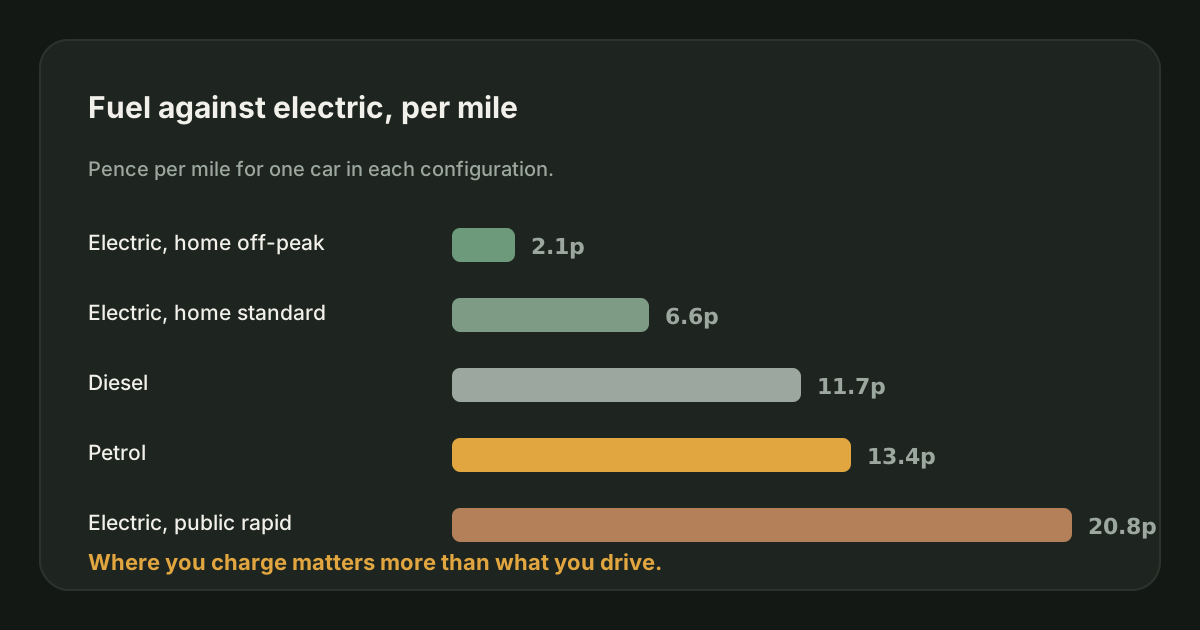
On home charging an electric car is dramatically cheaper per mile than petrol, often by a factor of four or five. On public rapid charging the gap narrows to very little. Whether it works for you is mostly a question of where you charge, not of what you drive.
Correct for the 2026/27 tax year. Last checked 12/09/2026.
This is the single largest running-cost decision a gig driver makes, and it turns almost entirely on one question: do you have somewhere to charge overnight.
The arithmetic
Pence per mile for one car in each configuration. Your tariff and your efficiency will differ.
| How it is fuelled | Assumption | Pence per mile |
|---|---|---|
| Petrol | 48 MPG at £1.42 a litre | 13.4p |
| Diesel | 58 MPG at £1.49 a litre | 11.7p |
| Electric, home off-peak | 3.8 miles per kWh at 8p per kWh | 2.1p |
| Electric, home standard rate | 3.8 miles per kWh at 25p per kWh | 6.6p |
| Electric, public rapid | 3.8 miles per kWh at 79p per kWh | 20.8p |
Over 18,000 miles that is £2,412.00 on petrol, £378.00 on off-peak home charging, and £3,744.00 on public rapid charging. The spread between the best and worst electric case is larger than the difference between electric and petrol.
What the table does not show
- Purchase price. Electric cars cost more to buy, and depreciation is a real cost per mile.
- Servicing. Fewer moving parts, generally lower servicing, but tyres wear faster on a heavier car doing stop-start work.
- Insurance. Often higher, and hire and reward cover on an electric car narrows the market further.
- Time. Twenty minutes on a rapid charger mid-shift is twenty minutes not earning.
How HMRC treats it
The mileage rate does not change. 55p for the first 10,000 business miles and 25p after, whatever the car runs on. For a driver with cheap home charging that makes the rate considerably more generous in cash terms than it is for a petrol car, because the rate is a fixed deduction and the underlying cost is lower.
If you claim actual costs instead, the business share of the electricity is claimable, and the record keeping for home charging is harder than for a fuel receipt. Simplified mileage against actual costs covers the choice.
Clean air zones
An electric car is exempt from every UK charging zone. For a London or Birmingham driver that is worth more than the fuel saving on its own. ULEZ, clean air zones and the congestion charge has the figures.
Sources
Common questions
- Is an electric car cheaper for delivery driving?
- Per mile, on home charging, by a wide margin. The saving shrinks sharply if you rely on public rapid chargers, and it can disappear entirely at the most expensive ones.
- Can I claim the electricity?
- If you use the mileage rate, no, because the rate covers all running costs. The rate is the same 55p whether the car is petrol, diesel or electric. If you claim actual costs instead, you can claim the business proportion of the electricity.
- Does the mileage rate differ for an electric car?
- No. An electric car claims 55p a mile for the first 10,000 business miles and 25p after, exactly the same as a petrol or diesel car. Because the underlying cost per mile is lower, the same deduction goes further.
- What about range for a full shift?
- A day of urban delivery is usually well within range. The problem cases are long parcel rounds in cold weather and drivers with no home charger, where mid-shift charging costs time as well as money.
- Is charging at home always cheapest?
- On an off-peak tariff, yes, by a long way. On a standard tariff the advantage is smaller but still real.
About the author
Issac Davies, Founder of JoltMile
Issac Davies drives for gig apps in the UK and built JoltMile to show drivers what a shift actually pays once fuel, insurance and tax come off. Every guide here is checked against HMRC and gov.uk guidance, and is information rather than tax advice.
Track this automatically
Fuel tracking · Electric and PHEV setup: the JoltMile app works this out from your own shifts. Your first 10 shifts are free.
Related
What it really costs you per mile
Your cost per mile is fuel plus tyres, servicing, insurance, repairs and the value the car loses, divided by the miles you drive. Fuel is usually less than half of it, which is why a driver who only counts fuel thinks the work pays better than it does.
Vehicles & equipmentUpdated 27/08/2026
Is an electric car worth it for delivery work?
The running costs are much lower if you can charge at home. The mileage claim is the same as any car, which makes an EV unusually tax-efficient for a driver.
Vehicles & equipmentUpdated 20/08/2026
What makes a good delivery car?
Running cost per mile matters more than the sticker price. How to compare vehicles for delivery work, and where electric does and does not pay.
Vehicles & equipmentUpdated 19/08/2026
Buying, leasing or PCP as a gig driver
For high-mileage gig work, buying a cheap car outright is usually cheapest, because leases and PCP deals price mileage and you will exceed the allowance. The exception is an electric lease where the fuel saving and the zone exemptions outweigh the monthly cost.
Vehicles & equipmentUpdated 27/08/2026
Amazon Flex, Evri, DPD and Yodel: parcel work compared
Parcel work suits drivers who want daytime hours and a predictable load. The four big options differ on the vehicle they need, how you are paid, how often, and how much of the week they expect. Here they are side by side.
Earnings & profitabilityUpdated 29/09/2026
Car, moped or bike: which is best for delivery work?
A bike wins in a dense city centre, a moped wins in most towns, and a car wins on parcel work and bad weather. The tax relief follows the same order in reverse.
Vehicles & equipmentUpdated 20/08/2026